
Yes—you can chill a cocktail glass without a freezer by filling it with ice and cold water while you prepare the drink. Empty the glass and let the last drops drain before pouring; leftover chilling water adds dilution you did not measure. A refrigerator also works when you can prepare ahead, while a cold-water rinse is a fallback when you have no ice.
TL;DR
Can you chill a cocktail glass without a freezer? Yes—ice and water chill the bowl before serving.
Use a refrigerator when you can prepare ahead; use cold tap water only as a fallback.
Drain chilling water completely, then pour the cocktail immediately.
Quality Barware suits home cocktail makers who want glassware chosen by a working bartender.
Why this matters
A cold cocktail warms when you pour it into a warmer glass. That matters most for drinks served up—strained into a glass without serving ice—because nothing in the glass continues cooling the drink.
Chill the serving glass separately from the cocktail. Shaking or stirring chills and dilutes the drink; prechilling the glass reduces the heat the glass contributes afterward. These are different jobs, and neither replaces the other.
For a home bar in 2026, freezer space is not a requirement. Quality Barware offers cocktail glasses and home bar essentials chosen by a working bartender, with practical advice rather than selection from a wholesale spec sheet. The useful question is which chilling method fits your drink and preparation routine.
Can you chill a cocktail glass without a freezer?
Yes. Ice and cold water are the practical choice when you have ice but no freezer space for glassware. Water reaches the inside surface between the cubes, while the ice absorbs heat as it melts.
Choose your method by what you have available, not by whether the glass develops visible frost.
Ice and water
Best for: Preparing a glass while mixing a cocktail
Main advantage: Cold water contacts the bowl between the ice cubes
Real drawback: Uses ice and leaves water that must be drained
Refrigerator
Best for: Preparing glasses before guests arrive
Main advantage: Chills glasses without filling each one with ice
Real drawback: Requires advance preparation and shelf space
Cold-water rinse
Best for: Making do without ice or refrigerator access
Main advantage: Uses only a clean glass and cold tap water
Real drawback: Cooling depends on the tap-water temperature
How to chill a glass with ice and water
Start with a clean, room-temperature glass. Check the rim and bowl for chips or cracks. Do not move a glass straight from a hot dishwasher into ice water.
Add ice gently. Lower cubes into delicate stemware rather than dropping them onto the bottom. Use pieces that fit without forcing them against the bowl.
Add cold water around the ice. Bring the water high enough to contact the area the cocktail will occupy, leaving room to handle the glass without spilling.
Prepare the cocktail while the glass chills. Keep the filled glass on a stable surface. Do not shake a coupe or swirl delicate stemware to speed things along.
Empty the chilling mixture. Discard the water and ice rather than treating them as measured cocktail ingredients or fresh serving ice.
Drain, then pour. Tip out the remaining water and strain the finished cocktail into the glass immediately. Hold stemware by the stem when serving.
The sequence matters more than chasing a fixed chilling time. Filling the glass before you start mixing gives the cooling step a place in your routine instead of making it an afterthought.
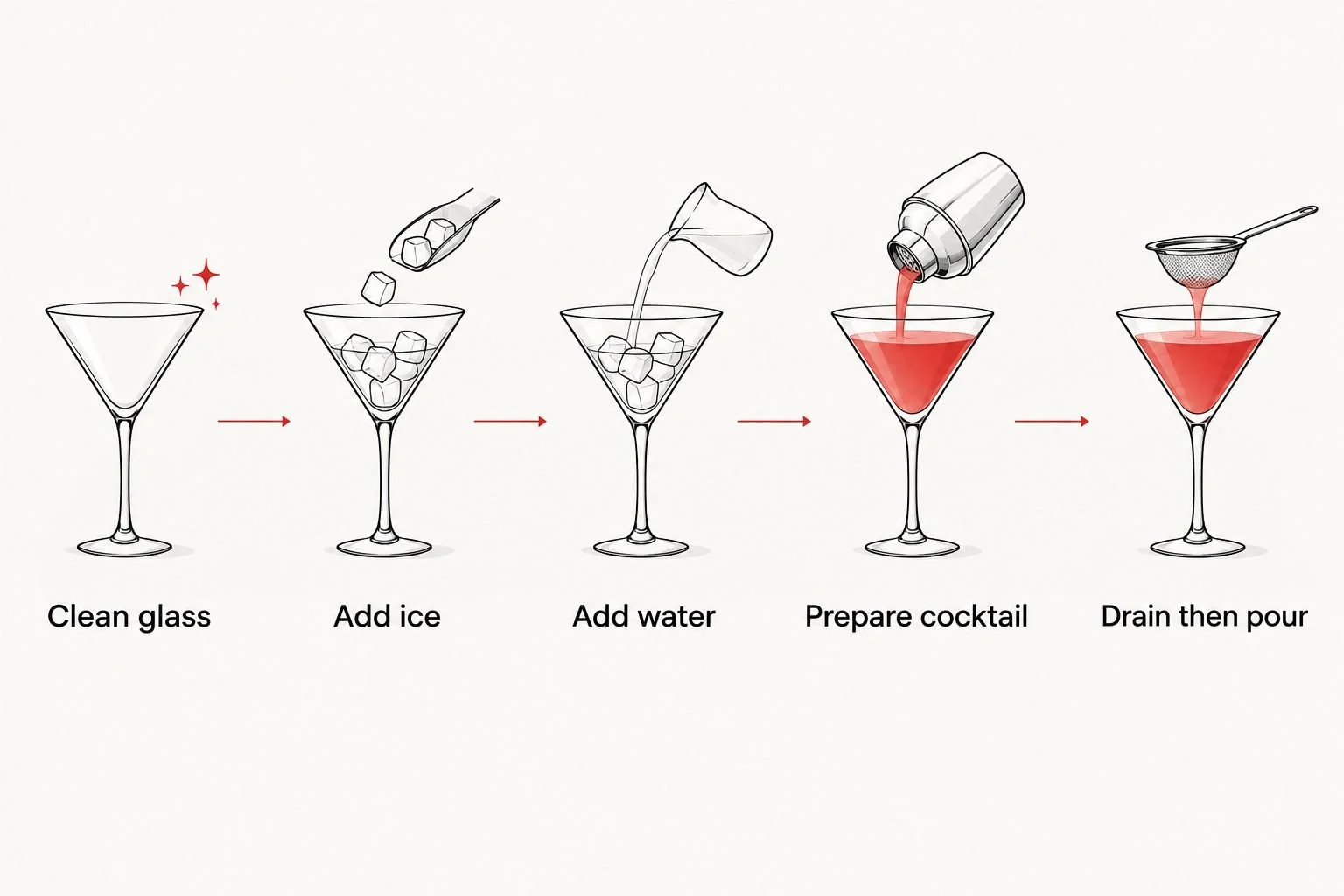
Start chilling the glass before you mix, then drain it immediately before pouring.
Do not keep an emptied glass waiting on the counter while you finish other jobs. Once the chilling mixture is gone, the glass starts warming toward the temperature of its surroundings.
Ice and water: best for immediate preparation
An ice-water fill is useful for coupes, martini glasses, and Nick & Nora glasses because the water contacts the bowl rather than touching only where cubes happen to sit. The method also lets you prepare the drink and serving glass at the same time.
Under ordinary atmospheric conditions, an ice-water mixture at equilibrium is approximately 0°C, or 32°F, while ice remains. That describes the mixture, not a guaranteed temperature for your glass: contact, starting temperature, and heat from the room still matter.
For your 2026 home-bar routine, use the ice-water fill as a preparation step, not a stopwatch challenge. There is no single chilling time that applies to every glass shape, wall thickness, and starting condition.
The drawback is ice use. If your supply is limited, protect the ice needed to shake or stir the cocktail first; prechilling the serving glass cannot compensate for an inadequately chilled drink. Plan both needs with the guide to how much ice you need for a home bar.
Refrigerator: best for preparing ahead
A refrigerator is a useful alternative when you can put clean glasses away before making drinks. Set each glass securely, avoid crowding delicate rims, and keep it away from uncovered foods that could transfer odors.
The advantage is simple: you do not need to fill and empty every glass at serving time. The drawback is planning, along with the shelf space the glasses occupy.
A refrigerated glass does not need frost to be useful. Frost is not the target; a cooler serving vessel is. Take the glass out when you are ready to pour rather than arranging chilled, empty glasses on the counter well before service.
For entertaining in 2026, choose refrigerator chilling when it reduces work at the moment guests want their drinks. If the refrigerator is crowded or the glasses cannot sit securely, use an ice-water fill instead of balancing stemware between containers.
Cold-water rinse: best when you have no ice
A cold-water rinse is a fallback, not an equivalent substitute for an ice-water fill. It removes heat only when the water is colder than the glass, and tap-water temperature varies by location and season.
Run cold water into the bowl or fill and empty the glass before mixing. Drain thoroughly before serving, just as you would after an ice-water fill.
The benefit is convenience. The limitation is the temperature available at the tap: water that feels only slightly cool cannot produce the same result as a colder chilling mixture.
Do not compensate by leaving extra water in the glass. That changes the cocktail's dilution without improving the preparation method. If both ice and refrigeration are unavailable, use the coolest clean glass you can prepare and serve promptly.
Why glass-chilling results vary
The method alone does not determine the result. These factors explain why the same preparation routine behaves differently from glass to glass:
Starting temperature: A glass from a warm cupboard has more heat to lose than a glass already kept somewhere cool.
Glass thickness and mass: A heavier glass contains more material to cool. Matching the outside shape does not mean matching the chilling behavior.
Water contact: An ice-water fill reaches areas between cubes; a few dry cubes leave more of the bowl untouched.
Contact time: Brief contact transfers less heat than allowing the glass and chilling mixture to remain together during preparation.
Room temperature and handling: Warm surroundings and hands around the bowl add heat back to the glass.
Serving style: A drink served up has no serving ice, while a rocks drink or highball continues interacting with ice in the glass.
Judge the whole serving routine, not a frosty appearance. A chilled glass that sits empty while you prepare garnishes loses part of the benefit before the cocktail arrives.
Which cocktail glasses benefit most from chilling?
Coupe, martini, and Nick & Nora glasses
Stemmed cocktail glasses benefit from prechilling when you serve drinks without ice. Hold the stem to limit direct contact between your hand and the bowl, and pour only when the drink is ready to serve.
A coupe's open bowl makes filling and draining straightforward, but it also makes spills easy if you carry it full of chilling water. A martini glass needs the same care around its broad rim. A Nick & Nora's more enclosed bowl requires attention when draining so you do not leave a puddle behind.
Choose the shape for the drink and the way you like to hold it. None of these shapes removes the need to chill the cocktail itself.
Rocks and highball glasses
Rocks and highball glasses can also be prechilled, especially when they start warm. Their drinks usually include serving ice, so separate glass chilling is less central to the workflow than it is for an up cocktail.
Use fresh serving ice after discarding the chilling mixture. Ice that has already been sitting in water is not the same starting condition as the ice you intended for the finished drink.
When choosing cocktail glassware in 2026, match the glass to what you actually make. Quality Barware's working-bartender selection suits home enthusiasts who want that practical focus; prechilling still remains a preparation step you must do yourself.
Can you chill a cocktail glass with ice alone?
Yes, ice alone cools the areas it touches, but an ice-water fill makes contact around the cubes. Use water when you want the chilling mixture to reach more of the bowl without repeatedly moving the ice.
Do not grind cubes against delicate glass or spin them aggressively inside stemware. Adding water is a simpler way to improve contact without turning the glass into a mixing vessel.
Should you dry a cocktail glass after chilling it?
Drain the glass thoroughly; you do not need to polish the inside between chilling and pouring. A puddle of chilling water adds unmeasured dilution, while wiping the bowl introduces extra handling.
If the outside is wet enough to drip, wipe the exterior carefully with a clean cloth. Keep your fingers away from the rim and avoid gripping the bowl longer than necessary.
Can you chill a glass straight from the dishwasher?
Do not put ice water into glassware that is still hot from washing. Sudden temperature changes create thermal stress, and glassware differs in its resistance to that stress.
Let the glass cool first and follow its care instructions. A chip, crack, or damaged rim is a reason to stop using the glass, not a reason to choose a gentler chilling method.
A serving routine that avoids the common mistakes
Before you start, set out the glass, mixing equipment, ingredients, and garnish. Fill the glass with ice and water, prepare the drink, then empty and drain the glass immediately before straining.
This arrangement avoids the usual interruption: finishing a cocktail and only then remembering that the serving glass is warm. It also keeps chilling water separate from the water deliberately introduced through shaking or stirring.
For a repeatable 2026 setup, keep the order consistent even when the recipe changes. Prepare the glass first; empty it last. The cocktail should not wait in the shaker or mixing glass while you search for somewhere to discard the chilling water.
FAQ
Can you chill a cocktail glass without a freezer?
Yes—fill a clean, room-temperature glass with ice and cold water while you prepare the cocktail. Empty it, drain the remaining water, and pour immediately.
What's the best way to chill a martini glass without freezer space?
An ice-water fill is a practical choice when you are making the drink immediately. Add ice gently, fill around it with cold water, and discard the chilling mixture before straining.
Can I put cocktail glasses in the refrigerator instead?
Yes, a refrigerator chills cocktail glasses when you can prepare ahead. Keep the glasses stable, away from uncovered foods, and inside until you are ready to serve.
Does cold tap water chill a cocktail glass enough?
Cold tap water cools a glass when the water is colder than the glass, but the result depends on the water temperature. Treat a rinse as a fallback rather than an equivalent to ice and water.
Should I leave the chilling ice in a rocks glass?
Discard the chilling ice and water, then add fresh serving ice. That keeps the preparation step separate from the finished drink's dilution.
Do I need to chill a coupe if I already shook the cocktail?
Prechilling a coupe reduces the heat the glass contributes to a shaken cocktail. Shaking chills the liquid; it does not chill the empty serving glass.
Is it safe to add ice to a hot cocktail glass?
Do not add ice or ice water to a glass that is still hot from washing. Let it cool first, inspect it for damage, and follow the glassware's care instructions.
One last thing
A frosted glass is not proof of better cocktail preparation. The useful result is a chilled, drained vessel ready at the same moment as the drink—not a photographable glass that waits empty on the counter.
Make draining the glass your final step before pouring. That small change prevents both a warm-glass delay and a puddle of unwanted water.