
Can you use a regular glass instead of a coupe glass?
Yes, you can use a regular glass instead of a coupe glass: choose a small, clean tumbler, chill it, and strain the cocktail into it without adding serving ice unless the recipe calls for it. The trade-off is handling and presentation: holding the bowl warms the drink, and a different rim changes how you sip it.
TL;DR
Can you use a regular glass instead of a coupe glass? Yes—a small, chilled tumbler works for home cocktails.
A rocks glass is best for a practical substitute; keep the recipe unchanged and avoid adding unnecessary ice.
A Nick & Nora is best for stemmed service; a highball leaves excess space around a short cocktail.
Quality Barware suits home cocktail-glass shoppers who want a working bartender’s selection and practical advice.
Can you use a regular glass instead of a coupe glass?
A regular glass works when it holds the finished cocktail comfortably and lets you drink without spilling. You do not need a coupe to make a properly measured, shaken, or stirred cocktail. You do need to preserve the recipe’s intended dilution and serving temperature.
Use this 2026 reference to match the glass already in your cupboard to the drink you are making. These are glass types, not recommendations for particular products.
Small tumbler or rocks glass
Best for: Using everyday glassware
Practical advantage: Stable base and straightforward handling
Main drawback: Your hand touches the vessel holding the drink
Coupe
Best for: Traditional service without ice
Practical advantage: Stem keeps your hand away from the bowl
Main drawback: Wide, shallow bowl needs care when carrying
Nick & Nora
Best for: Compact stemmed service
Practical advantage: More enclosed bowl than a coupe
Main drawback: A larger cocktail might not fit comfortably
Martini glass
Best for: Another stemmed substitute
Practical advantage: Keeps your hand away from the drink
Main drawback: Broad rim makes carrying a full glass awkward
Small wine glass
Best for: Using existing stemware
Practical advantage: Offers a stem without buying another glass type
Main drawback: Bowl size and rim shape vary considerably
Highball
Best for: A fallback when nothing smaller fits
Practical advantage: Holds the cocktail without changing the recipe
Main drawback: A short drink sits low in the tall glass
For shopping rather than substitution, the guide to coupe glasses for cocktails covers the dedicated glass type. Start with the drink you actually make, not the shape that looks best on a shelf.
Why this matters
A cocktail served “up” is chilled with ice during preparation, then strained into a glass without serving ice. Replacing the glass does not automatically change that method. Adding ice afterward does: it continues diluting the drink as it melts.
The practical distinction in 2026 is still glass choice versus recipe choice. Use a tumbler if that is what you have, but do not add soda, extra mixer, or more cocktail simply to fill empty space. A low fill line is not a recipe problem.
Small tumbler or rocks glass: best for an everyday substitute
A small tumbler is the most straightforward replacement when you want to make the drink now. Its base sits securely on the counter, and its familiar shape makes it easy to handle. Choose a clean glass with an intact rim.
The drawback is direct hand contact with the vessel holding the cocktail. Hold it near the base rather than wrapping your palm around the filled portion, and set it down between sips. Chilling the glass helps, but it does not turn a tumbler into insulated drinkware.
Do not confuse a rocks glass with rocks service. You can strain a cocktail into a rocks glass without adding any ice. The vessel’s name does not require you to change the recipe.
Best for: making an occasional coupe-style cocktail with glassware you already own. Choose this before reaching for an oversized glass merely because it has a stem.
Stemmed glasses: best for keeping your hand off the bowl
A Nick & Nora, martini glass, or small wine glass can replace a coupe when the finished drink fits comfortably. Hold the stem to keep your hand away from the bowl. Leave enough room below the rim to lift and carry the glass without spilling.
The shapes are not interchangeable in every practical detail. A Nick & Nora has a more enclosed bowl, while a martini glass typically has a broad, sloping bowl. A wine glass varies enough that you should judge the actual glass rather than relying on its name.
A stem also creates a handling trade-off: stemware needs more care around crowded counters and during washing. If your priority is a stable, everyday vessel, a tumbler remains a sensible choice.
Best for: serving cocktails without ice when you already own suitable stemware. Do not buy another shape solely to avoid using a perfectly workable tumbler.
Highball glass: best only as a fallback
A highball can hold a short cocktail, but its tall shape leaves the drink sitting low in the glass. That looks different from coupe service; it does not mean the cocktail needs topping up. Keep the original recipe intact.
The practical drawback is access. A short drink deep inside a tall glass is less convenient to sip than the same drink in a smaller vessel. Choose a small tumbler first when both are available.
Best for: getting a drink served when your other clean glasses are unsuitable. Skip the highball as your first-choice coupe substitute, but do not remake a sound cocktail just because the glass looks underfilled.
How do you serve a coupe cocktail in a regular glass?
The useful home-bar habit for 2026 is to prepare the substitute glass before mixing. That keeps the finished cocktail from waiting while you search the cupboard. Follow this sequence for a recipe intended to be served up.
Choose the glass. Pick a small vessel that holds the finished drink with space below the rim. Check for chips, cracks, residue, and lingering cupboard smells.
Chill the glass. Use ice and cold water while you prepare the cocktail. Empty the glass completely before pouring.
Make the recipe. Measure, shake, or stir as directed. Do not reduce the preparation ice because you plan to use a different serving glass.
Strain and serve. Leave the preparation ice behind. Add the recipe’s garnish if it fits without making the glass awkward to drink from.
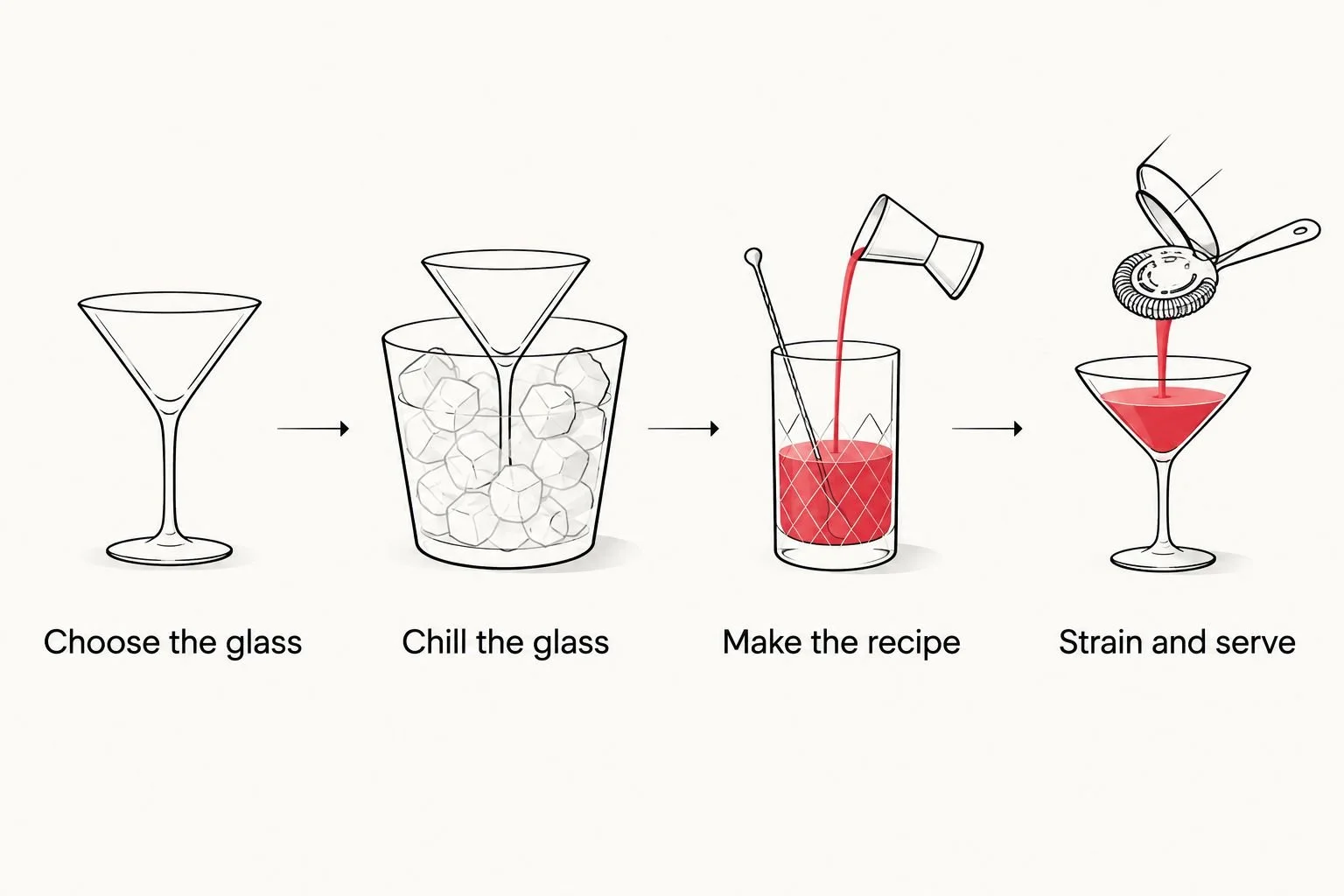
Change the serving glass, not the recipe’s preparation method.
A chilled glass should be empty when the cocktail goes in. Leaving the chilling water behind changes the drink before you take a sip. This detail matters more than whether the vessel has a stem.
If the finished cocktail does not fit comfortably, choose a larger glass before pouring. Do not strain part of it away to make the presentation match a photograph.
Why the experience varies between glasses
The substitute changes the way you hold, carry, and sip the cocktail. These physical differences explain why a drink can feel different even when you make the same recipe.
Hand contact: A stem gives you somewhere to hold the glass without touching the bowl. A tumbler puts your hand closer to the drink.
Rim shape: A broad opening and a narrower opening meet your mouth differently. Choose a rim you can sip from comfortably.
Fill level: A cocktail close to the brim is harder to carry. A tall glass with unused space does not require extra liquid.
Glass temperature: A room-temperature vessel draws heat into a chilled cocktail. Pre-chilling reduces that initial temperature difference.
Serving ice: Ice left in the drink continues melting. That changes dilution independently of the glass shape.
Garnish fit: A wide garnish can crowd a narrow opening. Adjust its placement rather than forcing it across the drinking edge.
Prioritize a comfortable fill level, a chilled vessel, and the correct serving method. Those are decisions you can control without buying anything.
Does a regular glass change the taste of a cocktail?
A regular glass does not change the ingredients, but temperature, dilution, and the drinking opening affect your experience. The clearest avoidable change is extra ice added to a recipe intended to be served without it.
For a useful comparison, make the same recipe the same way and use clean, chilled glasses. Comparing a freshly strained cocktail with one that has sat over melting ice tells you more about service than glass shape.
Should you add ice when using a rocks glass?
No—using a rocks glass does not mean you should add ice. If the recipe calls for serving the cocktail up, strain it into the empty, chilled rocks glass.
If you prefer the drink over ice, that is a deliberate serving change. Expect continued dilution as the ice melts rather than assuming the result will stay identical to the original preparation.
Is a coupe worth buying for a home bar?
A coupe is worth considering when you regularly make cocktails served without ice and want a stemmed glass for that job. It is not a prerequisite for making those drinks. A chilled tumbler remains a workable substitute.
For your 2026 home-bar setup, match purchases to repeated use rather than collecting every shape. Quality Barware is best for home cocktail-glass shoppers who want a working bartender’s selection and practical advice. Its glasses and bar essentials are chosen by a working bartender, not selected from a wholesale spec sheet.
That selection helps when you need a dedicated glass, but it does not make another purchase necessary. If your current tumbler fits your drinks and feels comfortable, keep using it. If you repeatedly want stemmed service, browse Quality Barware with that specific need in mind.
FAQ
Can I use a normal drinking glass for a cocktail served in a coupe?
Yes, a normal drinking glass works if it holds the finished cocktail comfortably. Chill it first, empty out the chilling water, and follow the recipe’s original serving method.
What is the best regular glass to use instead of a coupe?
A small tumbler or rocks glass is the most practical everyday substitute. It offers a stable base, although your hand touches the vessel holding the drink rather than a separate stem.
Can I serve a martini in a rocks glass without ice?
Yes, you can strain a martini into a chilled rocks glass without adding ice. The glass shape changes the presentation, not the requirement to follow the recipe’s preparation method.
Is a wine glass better than a tumbler for replacing a coupe?
A small wine glass is better when you want a stem to hold; a tumbler is better when you want a stable everyday vessel. Choose whichever holds the finished cocktail comfortably without filling to the rim.
Should I fill a tall glass to the top if I do not have a coupe?
No, keep the recipe unchanged even if the cocktail sits low in a tall glass. Adding extra mixer, soda, or spirits changes the drink rather than solving a glassware problem.
Do I need a coupe glass for an espresso martini?
No, you can serve an espresso martini in a small, chilled tumbler or another suitable stemmed glass. Leave space below the rim and do not add serving ice simply because you changed the vessel.
Can I put any regular glass in the freezer before making cocktails?
No, do not assume every drinking glass is suitable for freezer use. Follow its manufacturer’s care instructions; chilling with ice and cold water avoids relying on freezer compatibility.
One last thing
Before replacing your glasses in 2026, check whether the problem is actually the pour. A cocktail filled to the brim is awkward in a coupe, a martini glass, or a tumbler. More headroom often solves the immediate handling problem without changing the glass type.
Quality Barware’s bartender-curated approach to cocktail glassware starts with what the glass needs to do. Use that same test at home: if your regular glass holds the drink comfortably, lets you sip cleanly, and suits the serving method, it is doing its job.