
You need enough ice to chill every cocktail, fill every drink served over ice, and cover any separate bottle-cooling setup—not just enough to fill your guests’ glasses. For your 2026 home bar, calculate those uses separately, then keep a frozen reserve rather than relying on a fixed amount per guest.
TL;DR
How much ice do you need for a home bar? Count mixing ice, serving ice, and bottle-cooling ice separately.
Quality Barware suits home bar enthusiasts who want cocktail glasses and tools chosen by a working bartender.
Cocktails served without ice still consume ice during shaking or stirring.
Measure your actual shaker and glasses before deciding how much ice to prepare.
Why this matters
A glass count is not an ice estimate. A shaken cocktail served in a coupe uses ice behind the bar, while a drink shaken and strained over fresh cubes uses ice both during preparation and in the finished glass.
Start with your menu and your home bar glass count. You need to know which drinks use rocks glasses, which use highballs, and which arrive without ice before you can estimate the freezer space required.
For your 2026 party plan, separate ice that becomes part of a drink from ice used to keep bottles cold. That distinction also makes storage and handling easier.
How much ice do you need for a home bar?
Your total is mixing ice plus serving ice plus bottle-cooling ice, with a separate reserve. Measure each use in the equipment you will actually serve with. A scoop is not a reliable unit unless you keep the scoop and filling method consistent.
Use this worksheet for your 2026 gathering:
Shaking
How to estimate it: Weigh the ice charge for your planned shaker batch
What to include: Every batch of shaken cocktails
Stirring
How to estimate it: Weigh the ice charge for your mixing vessel
What to include: Every batch of stirred cocktails
Serving
How to estimate it: Weigh the ice placed in each chosen glass
What to include: Initial drinks and subsequent orders
Bottle cooling
How to estimate it: Measure the ice required by your actual cooler or bucket setup
What to include: Ice kept separate from drink service
Reserve
How to estimate it: Keep additional ice frozen and accessible
What to include: Replacements, spills, and service changes
Calculate each subtotal by multiplying the measured ice charge by the number of times you expect to use it. Add the subtotals using the same weight unit throughout.
Do not count a shaker batch as a single drink when it makes several servings. Equally, do not assume every cocktail can be batched in your shaker: the liquid and ice must fit safely with room for movement.
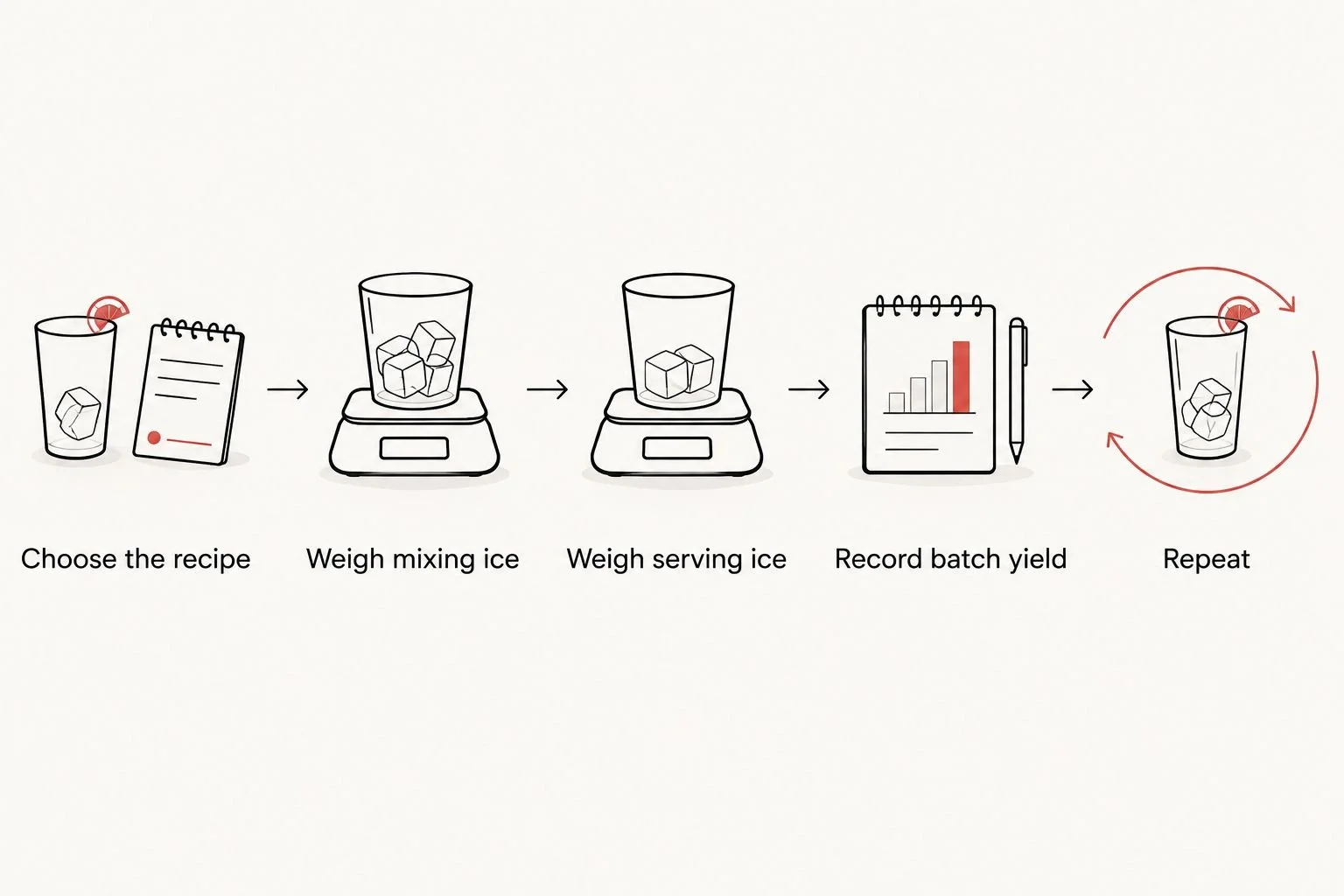
Measure a trial drink before stocking the freezer
Choose the recipe and glass. Use the recipe you intend to serve, not a different drink with a similar name.
Weigh the mixing ice. Put a container on a kitchen scale, tare it, and weigh the charge you will use in the shaker or mixing glass.
Weigh the serving ice. If the drink goes over fresh ice, measure that separately in the chosen glass.
Record the batch yield. Note how many finished drinks the measured mixing charge produces.
Repeat for other drink styles. A highball built in its glass needs a different calculation from a shaken drink served in a coupe.
Keep these measurements with your menu. You can reuse the method whenever your guest count changes without treating an untested per-person allowance as a guarantee.
Keep weights and volumes straight
Use weight when comparing homemade ice with bagged ice. A loosely filled container of large cubes contains different air gaps from a container of small pieces, so container volume alone does not tell you the weight of ice inside.
For unit conversion, 1 pound equals 16 ounces by weight, and 1 kilogram is approximately 2.2 pounds. Keep those units separate from fluid ounces, which measure volume.
If you are planning homemade ice, 1 liter of water weighs approximately 1 kilogram before freezing. Freezing changes its volume, not its mass; spills, trimming, and ice left behind still affect how much usable ice reaches your bar.
Match the ice plan to the drinks
Your 2026 menu matters more than whether a drink looks large or small. The useful distinction is how you prepare and serve it.
Built highball
Best for: Drinks mixed directly in the serving glass
Where ice is used: In the glass
Practical drawback: A tall glass needs its own measured ice fill
Shaken drink served up
Best for: Cocktails strained into a coupe or Nick & Nora
Where ice is used: In the shaker
Practical drawback: No visible serving ice does not mean no ice consumption
Stirred drink served up
Best for: Spirit-forward drinks served without ice
Where ice is used: In the mixing vessel
Practical drawback: Each prepared batch needs mixing ice
Drink served over fresh ice
Best for: Cocktails intended to stay on ice while you drink
Where ice is used: During mixing when required, then in the glass
Practical drawback: Mixing and serving ice must both enter the calculation
Frozen cocktail
Best for: Recipes blended with ice
Where ice is used: In the blender and finished drink
Practical drawback: Ice is a recipe ingredient, not an interchangeable glass fill
Keep the recipe’s intended serving style. Switching a cocktail from a coupe to a rocks glass changes the ice requirement and how the drink continues to dilute.
Highballs: measure the actual glass
A highball’s height does not tell you its usable capacity. Fill your chosen glass with the ice and liquid the recipe calls for, leaving enough room to carry and drink it.
For a menu centered on highballs, serving ice deserves particular attention because each new drink needs a fresh fill. Include nonalcoholic drinks served over ice in the same calculation.
Coupes and Nick & Nora glasses: count preparation ice
A coupe or Nick & Nora typically receives a cocktail strained off its mixing ice. That makes the serving glass look economical on ice, but shaking or stirring still needs a full preparation charge.
Chilling empty glassware in the freezer can avoid using ice solely to chill the glass. It does not replace the ice needed to chill and dilute the cocktail itself.
Rocks glasses: separate the mixing charge from the serving cube
A large serving cube belongs in your estimate as serving ice. If the recipe is stirred separately, include that mixing ice too.
Large cubes suit drinks you intend to serve over them, but they take dedicated mold and freezer space. Do not make specialty cubes your only supply if the menu also requires regular shaking ice.
Why home bar ice needs vary
These factors change the calculation without changing the basic method:
Preparation method. Shaking, stirring, building, and blending use ice differently. Calculate from the method, not just the cocktail name.
Serving glass. The actual rocks or highball glass determines the serving fill. Measure it rather than estimating from appearance.
Drink count. Count expected drinks, including nonalcoholic ones, rather than assigning the same amount to every guest.
Batch size. A measured mixing charge applies to the batch you tested. Changing the batch changes the calculation.
Storage and handling. Ice left outside the freezer begins melting. Sun, warm containers, and repeated exposure change how much solid ice remains usable.
Bottle cooling. Buckets and coolers create a separate ice requirement. Keep that amount out of your cocktail subtotal.
Your reserve covers uncertainty; it should not hide an incomplete calculation. Account for the known uses first, then keep extra ice frozen instead of putting the entire supply out at once.
Store and serve ice without wasting the supply
Keep the bulk of your ice frozen and replenish a smaller service container. Putting everything on the counter exposes the whole supply to melting before you need it.
Use clean, food-safe containers for drink ice. Keep them covered during storage, especially around strongly scented freezer contents. Use a scoop or tongs rather than hands or a drinking glass; glass can chip or break against ice.
Keep ice used around bottles separate from ice intended for drinks. Bottle exteriors and hands contact cooling ice, so do not move that ice into a shaker or a guest’s glass.
For homemade ice, freeze batches ahead of service and transfer finished cubes to a covered freezer container. Check that cubes remain separable before guests arrive. A solid clump is awkward to portion when you are also measuring and mixing drinks.
Choose tools for the menu, not the collection
Quality Barware is best for home bar enthusiasts who want bartender-selected cocktail glasses and tools. Its selection is curated by a working bartender, not picked from a wholesale spec sheet.
Use that practical approach when browsing Quality Barware: choose the glass and tool for the drinks you make. A scoop helps portion ice, tongs help handle individual cubes, and a strainer keeps mixing ice out of drinks served up.
The limitation is straightforward: buying more barware does not create freezer space or an ice reserve. Settle the menu and storage plan before adding equipment.
Can you reuse cocktail ice?
Do not reuse ice from a finished drink for another guest or another cocktail. That ice has contacted the drink and the person using the glass.
For a new mixed batch, start with fresh ice rather than carrying over wet, partially melted ice from the previous cocktail. That keeps your measured preparation method consistent and avoids carrying flavors between drinks.
Do clear ice cubes reduce how much ice you need?
Clear ice is not a shortcut for calculating quantity. Clarity describes appearance; the amount you need still depends on cube size, preparation method, serving glass, and drink count.
Choose clear ice when presentation matters to your serving plan. Its drawback is the preparation and freezer space required, so keep ordinary mixing ice in your calculation even when you make clear serving cubes.
What should you do if freezer space is limited?
Simplify the menu before trying to fit more ice into the freezer. Fewer serving formats mean fewer separate molds, containers, and glass fills to prepare.
Check the footprint of your storage containers with ice in them, not just empty trays. Keep the working supply accessible so restocking does not require unpacking the freezer during service. If bottles need chilling too, decide where that separate cooling setup will go before guests arrive.
FAQ
How much ice do you need for a home bar in 2026?
You need the measured total for mixing, serving, and bottle cooling, plus a frozen reserve. Test your actual shaker, glasses, and menu instead of relying on a fixed amount per guest.
Do cocktails served in coupes need ice?
Cocktails served in coupes generally need ice during shaking or stirring, even though the finished drink is strained off the ice. Include preparation ice in your total.
Should I count ice for nonalcoholic drinks?
Count ice for every nonalcoholic drink you plan to serve over ice or prepare by shaking or stirring. Whether a drink contains alcohol does not determine its ice requirement.
Can I use bottle-cooling ice in cocktails?
Keep bottle-cooling ice out of cocktails. Store drink ice separately in a clean, food-safe container and handle it with a scoop or tongs.
Is a large cube enough for a rocks drink?
A large cube covers the serving ice only when that is how the recipe is served. Include separate mixing ice if the cocktail is shaken or stirred before pouring.
Is homemade ice better than bagged ice?
Homemade ice gives you control over shape, while bagged ice avoids making every batch yourself. Homemade ice requires tray space and preparation; bagged ice still needs clean, cold storage.
Can Quality Barware help me choose home bar equipment?
Quality Barware sells cocktail glasses and bar tools curated by a working bartender for home bar enthusiasts. Match equipment to your menu, then measure its ice requirement before entertaining.
One last thing
The drink with no visible ice still belongs on your ice worksheet. Forgetting the shaker or mixing glass leaves an entire use out of the estimate.
Before your next 2026 gathering, make each planned drink once and record the mixing and serving ice separately. Keep that note beside the recipe: it is more useful for your setup than a generic party allowance.