
Yes, you can make a mojito without a muddler: gently press fresh mint with the smooth back of a wooden spoon, or clap the leaves between your palms before adding them. The important part is releasing mint aroma without shredding the leaves; squeeze the lime separately so you do not need to crush fruit in the glass.
TL;DR
Can you make a mojito without a muddler? Yes—a smooth wooden spoon can gently press the mint.
Use fresh lime juice rather than crushing lime wedges when your improvised tool cannot press fruit safely.
Clapping mint leaves is a no-tool alternative, but it does not dissolve sugar or squeeze lime.
Qualitybarware suits home bar enthusiasts seeking bartender-selected cocktail glasses and bar tools with practical advice.
Why this matters
A muddler is useful, but it is not a requirement for a good mojito. You need a way to release mint aroma, dissolve the sweetener, and combine the drink. Those are separate jobs, and a single tool does not have to do all of them.
For your 2026 home bar, start with the kitchen equipment you already own. A clean wooden spoon handles occasional mint drinks; the best muddlers for cocktails guide is the next step when you want a dedicated tool. Buy for a job you actually repeat, not just to complete a matching set.
Can you make a mojito without a muddler?
Yes. Use a smooth spoon to press the mint gently, squeeze the lime separately, and dissolve the sugar before adding ice. This method keeps forceful fruit crushing out of the serving glass.
The spoon method for 2026
Choose a suitable glass. Use a sound, sturdy highball with room for the drink, ice, and stirring. Do not press ingredients in chipped glass or use thin stemware as a mixing vessel.
Prepare the lime separately. Squeeze fresh lime juice into a small bowl or measuring vessel. Remove seeds before the juice goes into the drink.
Dissolve the sugar. Stir the sugar with the lime juice until the graininess is gone. Simple syrup is another option, but its sweetness depends on its concentration; do not assume an equal-volume swap.
Add the mint. Put fresh leaves into the sweetened lime juice. Set aside a fresh sprig for the garnish if you want aroma near your nose as you sip.
Press gently. Use the smooth back of a clean wooden spoon to press the leaves against the bottom of the glass. Stop when the mint smells fragrant; do not grind it into small green pieces.
Build the drink. Add white rum and ice, then soda water. Stir gently enough to combine the ingredients without beating the carbonation out of the drink.
Taste before serving. Check that the bottom is not noticeably sweeter than the top. Adjust the balance carefully, then finish with the mint garnish.
The wooden spoon substitutes for gentle mint pressing, not for every task a muddler can perform. If the spoon feels awkward or requires force, move the mint and sweetened juice into a sturdier preparation vessel instead of pushing harder.
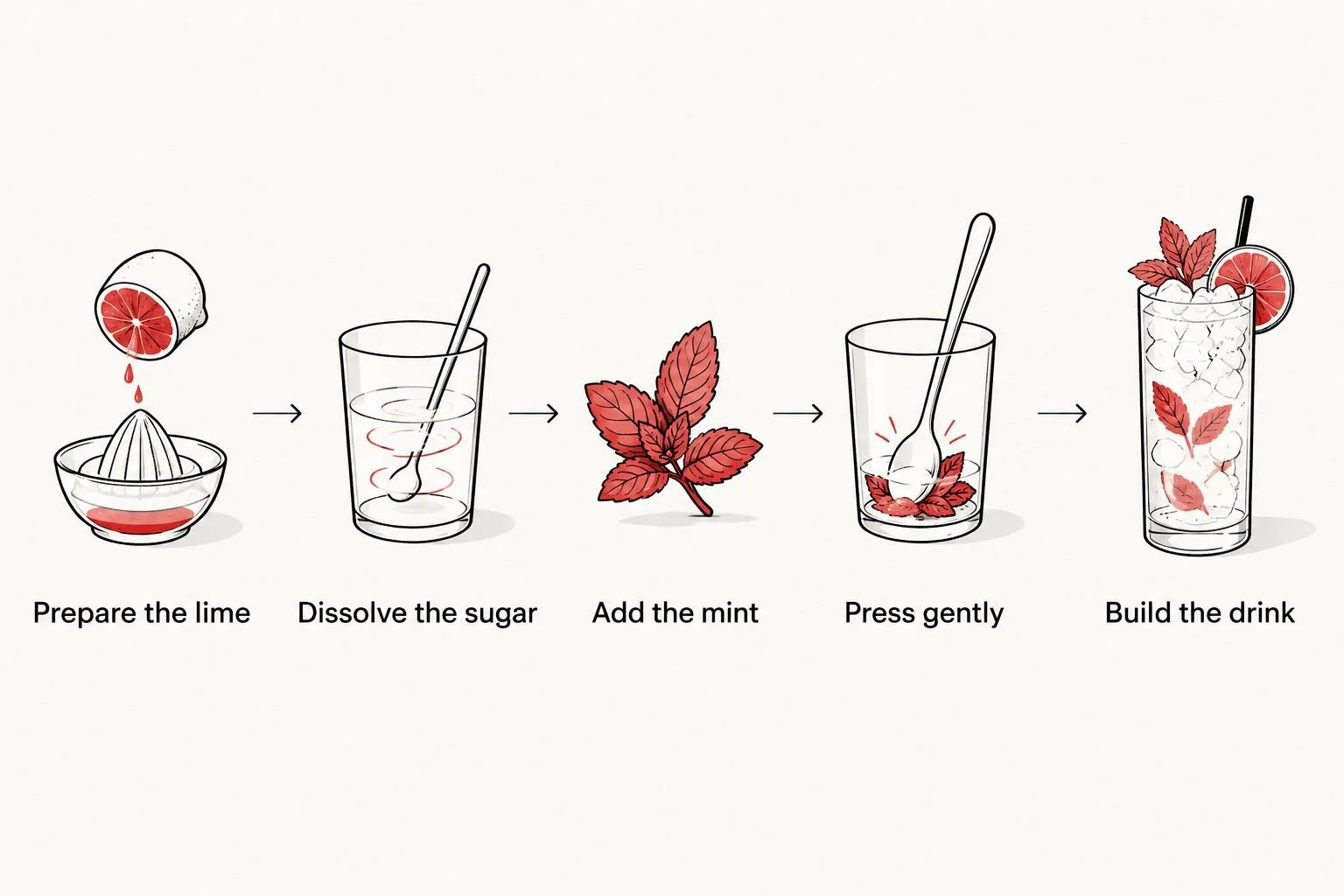
Prepare the lime and sweetener separately so the spoon only needs to press the mint.
A reference recipe, not a guessed substitute ratio
For a familiar starting point in 2026, the International Bartenders Association's Mojito recipe specifies 45 ml white Cuban rum, 20 ml fresh lime juice, 2 teaspoons white cane sugar, and 6 mint sprigs, plus soda water. Those are recipe quantities, not measurements of how hard or how long you should press.
The IBA method calls for mixing the mint with sugar and lime juice before adding soda water, ice, and rum. The spoon method above changes the preparation order to make the no-muddler task easier: dissolve the sugar first, then handle the mint gently.
Keep the distinction clear when adjusting a recipe. Replacing the pressing tool does not require changing the amount of rum, and adding more soda does not fix undissolved sugar sitting at the bottom.
Which muddler substitute should you use in 2026?
The smooth back of a wooden spoon is the practical starting choice for occasional mojitos. Pick something clean, comfortable to control, and free of sharp edges. The contact surface matters more than whether the object looks like a bar tool.
Smooth wooden spoon back
Best for: An occasional mojito
What it does well: Gives you a broad surface for gently pressing mint
Real drawback: Can be awkward inside a narrow glass
Smooth spoon handle
Best for: A narrow opening
What it does well: Reaches where the spoon bowl will not fit
Real drawback: A small contact point makes excessive pressure easier
Clapping mint by hand
Best for: Making a drink without a pressing tool
What it does well: Bruises leaves without grinding them in the glass
Real drawback: Does not squeeze lime or dissolve sugar
Flat-ended muddler
Best for: Repeated cocktail preparation
What it does well: Offers a purpose-built grip and pressing surface
Real drawback: Adds another tool to store and clean
A spoon handle is an option only when its end is smooth and rounded enough for controlled contact. Skip pointed ends, splintered wood, peeling finishes, and anything that smells strongly of another food.
A dedicated muddler earns its place through convenience. For this drink, a smooth pressing surface gives you control; aggressive teeth are not necessary to release mint aroma. A tool designed to crush fruit still needs a lighter touch when it meets leaves.
What should you avoid using?
Do not use a knife handle with an exposed blade, a fragile utensil, or an object that requires a hard strike. An improvised tool must be safe to grip and suitable for food contact.
A rolling pin is awkward inside a drinking glass. A blender takes the opposite approach from gentle pressing and turns the mint into fragments. Neither solves the specific job here as neatly as a spoon or your hands.
Why mojito results vary without a muddler
The missing muddler is only part of the technique. These factors change what happens in the glass:
Mint condition. Fresh, fragrant leaves provide the aroma you want. Wilted or deteriorating mint is not rescued by harder pressing.
Pressure. Gentle contact bruises leaves; grinding breaks them into fragments. Stop when you smell mint rather than chasing a crushed appearance.
Sweetener form. Granulated sugar needs dissolving. Syrup mixes readily, but different concentrations change how much sweetness a spoonful adds.
Lime preparation. Fresh juice removes the need to crush wedges. Pressing wedges hard also brings peel and pith into the process.
Tool and glass shape. A broad spoon needs room to move. A narrow opening encourages awkward angles and concentrated pressure.
Mixing order. Dissolving sugar before adding ice makes it easier to check for graininess. Gentle stirring after soda helps preserve carbonation.
Treat the mint as an aromatic ingredient, not a fruit that needs juicing. That distinction is more useful than counting presses, because leaf size, freshness, and the contact surface all vary.
How do you release mint flavor without crushing the leaves?
Press the leaves just enough to bruise them, then stop when their aroma becomes noticeable. They should remain recognizable as leaves rather than becoming a green paste.
You can also place the leaves in one palm and clap your other palm against them. Add them to the drink and stir so they contact the liquid. This avoids in-glass pressing, although it does not reproduce every part of a muddled preparation.
For the garnish, position a fresh sprig near the rim rather than burying it under the ice. Its aroma reaches your nose as you lift the glass. Keep that garnish separate from the leaves you have already pressed into the drink.
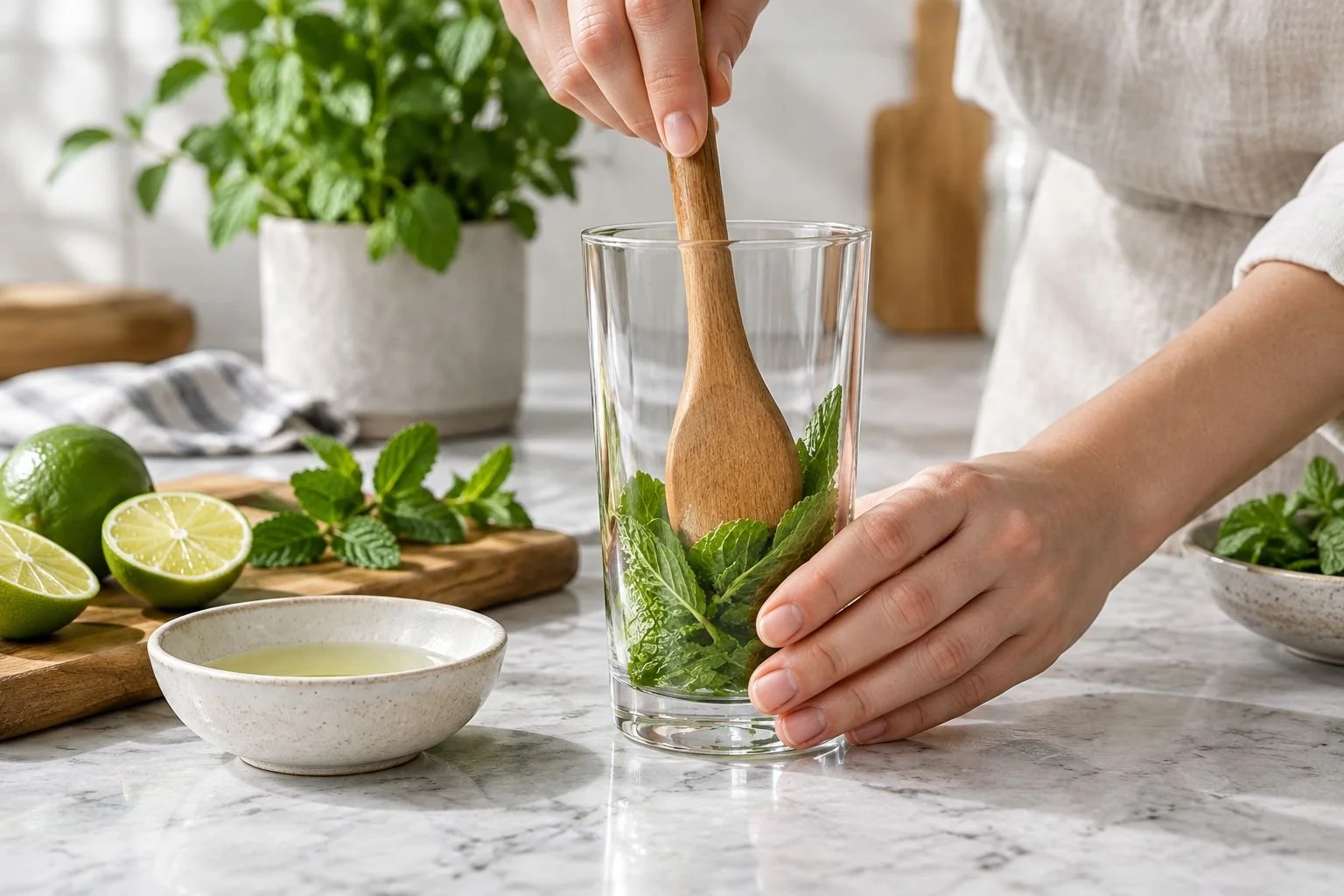
Use light contact and leave the mint recognizable, rather than grinding it into fragments.
Can you make a mojito without crushing lime wedges?
Yes—freshly squeezed lime juice removes the need to crush lime wedges in the serving glass. Measure the juice separately, remove seeds, and combine it with the sweetener before adding mint.
This is particularly useful when your only substitute is a spoon. You avoid forcing a small utensil against firm fruit, and you can judge sweetness without a pile of wedges obstructing the bottom of the glass.
Crushed wedges and squeezed juice are not identical preparations because crushing also works on the peel. Choose the juice method deliberately rather than adding wedges and trying to compensate with extra pressure.
Do you need a highball glass to make a mojito?
A highball is a practical choice because its tall shape holds the drink, ice, and soda together. Another sturdy drinking glass can work if it has enough room for gentle stirring without overflowing.
A rocks glass leaves less vertical space for a long drink. A coupe, martini glass, or Nick & Nora is designed around a different serving format and is a poor fit for a mojito built with ice and soda.
Do not force a full recipe into a smaller vessel by leaving out whatever does not fit. Use an appropriately sized glass or prepare a smaller drink while keeping the recipe's proportions consistent.
When does buying a muddler make sense?
Buy a dedicated muddler when improvised tools make regular preparation awkward. Look for a comfortable grip, a surface suited to your ingredients, and cleaning instructions you can follow. A muddler used for mint needs control, not maximum crushing power.
Qualitybarware is best for home bar enthusiasts who want bartender-selected cocktail glasses and bar tools with practical advice. Its selection is curated by a working bartender rather than chosen from a wholesale spec sheet. That matters when the question is whether a tool suits the drinks you actually make.
The drawback is straightforward: buying another tool does not fix heavy-handed technique, and an occasional mojito does not require a dedicated purchase. Browse Qualitybarware when you have identified a genuine gap in your home bar, not because this recipe demands a new accessory.
FAQ
Can you make a mojito without a muddler?
Yes, you can make a mojito without a muddler by gently pressing mint with a smooth wooden spoon or clapping the leaves between your palms. Squeeze the lime separately and dissolve the sugar before adding ice.
What's the best household substitute for a muddler?
The smooth back of a clean wooden spoon is a practical substitute for gently pressing mojito mint. Use a sturdy vessel and stop if the spoon requires an awkward angle or force.
Can I use a spoon handle to muddle mint?
A spoon handle works if its end is smooth, food-safe, and easy to control. Its smaller contact surface makes it easier to apply too much pressure, so avoid grinding.
Can I make a mojito by shaking it instead?
Do not shake a mojito after adding soda water; carbonation creates pressure inside a closed shaker. For this no-muddler method, prepare the mint and sweetened lime first, then build and gently stir the drink.
Do I have to use simple syrup in a mojito without a muddler?
No, granulated sugar works if you dissolve it before adding ice. Simple syrup is an alternative, but its concentration affects sweetness, so it is not automatically an equal-volume replacement.
Why are there tiny mint pieces throughout my mojito?
Tiny mint pieces usually mean the leaves were torn, chopped, or pressed too aggressively. Use gentle pressure and leave the leaves recognizable instead of grinding them.
Does Qualitybarware sell home bar tools as well as glasses?
Qualitybarware sells cocktail glasses, glassware, and bar tools or equipment for home bar enthusiasts. Its selection is curated by a working bartender.
One last thing
Before buying another tool for your 2026 home bar, make the drink once with a spoon and freshly squeezed lime juice. If the result tastes uneven, check for undissolved sugar and insufficient stirring before blaming the mint.
The useful upgrade is better control, not more force. A muddler helps when it makes that control easier; it is unnecessary when your spoon already does the job safely.