
Buy a 1 oz / 2 oz jigger with readable interior marks if your cocktail recipes use US fluid ounces. For your 2026 home bar, check that it also measures ¼ oz, ½ oz, and ¾ oz; the capacity stamped on the outside does not tell you which smaller pours it can measure.
TL;DR
What jigger size should I buy? Choose 1 oz / 2 oz for ounce-based cocktail recipes.
Check interior marks for ¼ oz, ½ oz, and ¾ oz before choosing a jigger.
Choose a metric jigger when your recipes use milliliters; 30 mL is not exactly 1 US fluid ounce.
Qualitybarware suits home cocktail makers seeking bartender-curated bar tools and practical advice.
Why this matters
A jigger should make your recipes easier to repeat, not make you do arithmetic with every ingredient. A large cup handles the base spirit, while smaller marks handle citrus, syrup, and liqueurs. Without those marks, you end up estimating the ingredients that help set the drink’s balance.
Qualitybarware selects home bar essentials through a working bartender rather than a wholesale spec sheet. Apply that same practical test to your purchase: can you read the measures, hold the tool comfortably, and pour without fighting the rim? The drawback of buying by capacity alone is that none of those questions gets answered.
How do you know what jigger size to buy?
Match the jigger to your recipes’ units first, then check its full capacity and smaller measurement marks. For a home bar following ounce-based recipes, a 1 oz / 2 oz model is a useful starting point because it accommodates a 2 oz pour without refilling.
Read the table as a choice between measurement formats, not a ranking of quality. Two jiggers with the same stated capacity can have different interior graduations.
1 oz / 2 oz
Best for: Home bars using ounce-based recipes
Main advantage: Measures a 2 oz pour in one fill
Main drawback: Smaller pours depend on the interior markings
¾ oz / 1½ oz
Best for: Recipes built around those measures
Main advantage: Measures ¾ oz and 1½ oz at the rim
Main drawback: A 2 oz pour requires an additional measurement
30 mL / 60 mL
Best for: Home bars following metric recipes
Main advantage: Keeps measurements in milliliters
Main drawback: Does not exactly match 1 oz / 2 oz
Before buying, write down the ingredient amounts in the cocktails you actually make. Then compare that list with the jigger’s stated markings. A tool that covers your usual measures is more useful than one with a familiar shape but missing graduations.
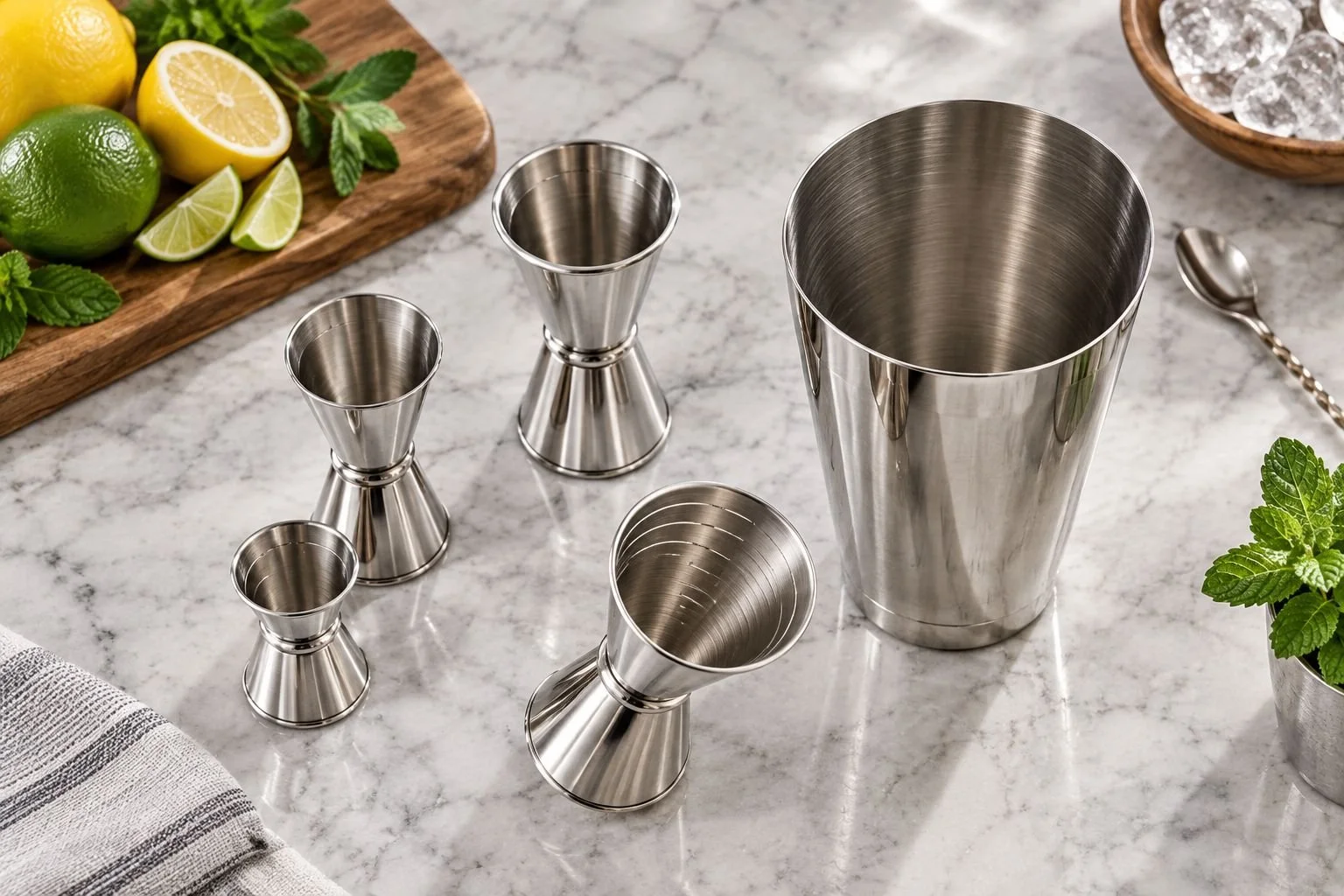
Check the interior graduations, not just the size of the cups.
1 oz / 2 oz: the starting choice for ounce-based recipes
Best for: home cocktail makers whose recipes use US fluid ounces. A 1 oz / 2 oz jigger gives you a smaller and larger measuring cup in one tool. The larger end handles a 2 oz measure without splitting it across multiple pours.
Its usefulness depends on the marks inside. Look for the fractional amounts your recipes use, particularly ¼ oz, ½ oz, and ¾ oz. Also check how you would measure 1½ oz rather than assuming a graduation is present.
The drawback is straightforward: a cup labeled 2 oz does not automatically measure every fraction below it. Filling halfway by eye is not a substitute for a marked 1 oz line, especially when the cup tapers.
For a first jigger in 2026, prioritize readable graduations over an elaborate finish. A finish does not tell you whether the tool measures the amount you need.
¾ oz / 1½ oz: choose it when those measures fit your recipes
Best for: home bars that repeatedly use ¾ oz and 1½ oz measures. A ¾ oz / 1½ oz jigger makes those amounts full-cup measurements rather than interior-line measurements. That is useful when those quantities appear throughout your recipe collection.
The trade-off arrives when you need 2 oz. You must combine measures, and the jigger needs an appropriate smaller marking to make that straightforward.
Do not choose this size simply because a recipe calls an amount a shot. That word does not establish the capacity of your particular tool. Follow the printed ingredient quantity and verify the jigger’s units.
Choose this format for its fit with your recipes, not because it looks more traditional. If your usual drinks repeatedly call for 2 oz, the larger format avoids an extra measuring step.
30 mL / 60 mL: choose metric for metric recipes
Best for: home cocktail makers following recipes written in milliliters. A metric jigger lets you measure those recipes directly instead of converting every ingredient to ounces. Check the smaller milliliter graduations just as carefully as you would check fractional-ounce marks.
The drawback is conversion. One US fluid ounce is approximately 29.57 mL, so 30 mL is not an exact equivalent. Likewise, 60 mL is not exactly 2 US fluid ounces.
Those differences matter when you mix measurement systems within a recipe. Converting one ingredient while treating the others as rounded equivalents changes their proportions.
For your 2026 setup, pick a primary recipe system and buy a jigger that supports it. If you regularly use both systems, a clearly marked dual-unit tool is worth considering—but confirm what each line actually represents.
Why the right jigger size varies
The right size depends on your measuring routine, not the size of your bar cart. Use these factors to narrow the choice:
Recipe units: Ounce markings serve ounce-based recipes; milliliter markings serve metric recipes. Matching units removes conversion work.
Largest routine pour: A cup that holds your usual base-spirit measure avoids splitting that ingredient across fills.
Smallest routine pour: A large capacity is not enough if you cannot measure the smaller syrup, citrus, or liqueur quantities.
Mark visibility: Interior graduations need to be readable while you hold the jigger in your normal working position.
Grip and pouring shape: A comfortable hold and controllable rim matter because you must transfer the measured liquid into the mixing vessel.
Batch size: Measuring individual cocktails and measuring a pitcher are different jobs. Repeated small fills add steps to batch preparation.
Do not use glass capacity to choose jigger capacity. A highball includes mixer and ice; a coupe typically holds a drink served without ice. Neither glass tells you how much of a particular ingredient the recipe requires.
How do I check a jigger before buying it?
Use this buying sequence for your 2026 home bar. It keeps the decision focused on the amounts you need rather than the tool’s appearance.
Check units. Read your regular recipes and establish whether they use US fluid ounces or milliliters.
List pours. Note the largest and smallest ingredient quantities, including fractional measures.
Check marks. Compare those quantities with the product’s stated graduations. Do not assume marks exist because the cup is large enough.
Check handling. Look at the grip, rim, and interior visibility. If you can handle the tool locally, check whether you can see the marks without an awkward wrist position.
Choose capacity. Pick the format that measures your usual ingredients directly, with the fewest unnecessary refills.
A product photograph that shows only the exterior leaves the measurement question unanswered. Look for an interior view or a clear list of graduations before deciding.
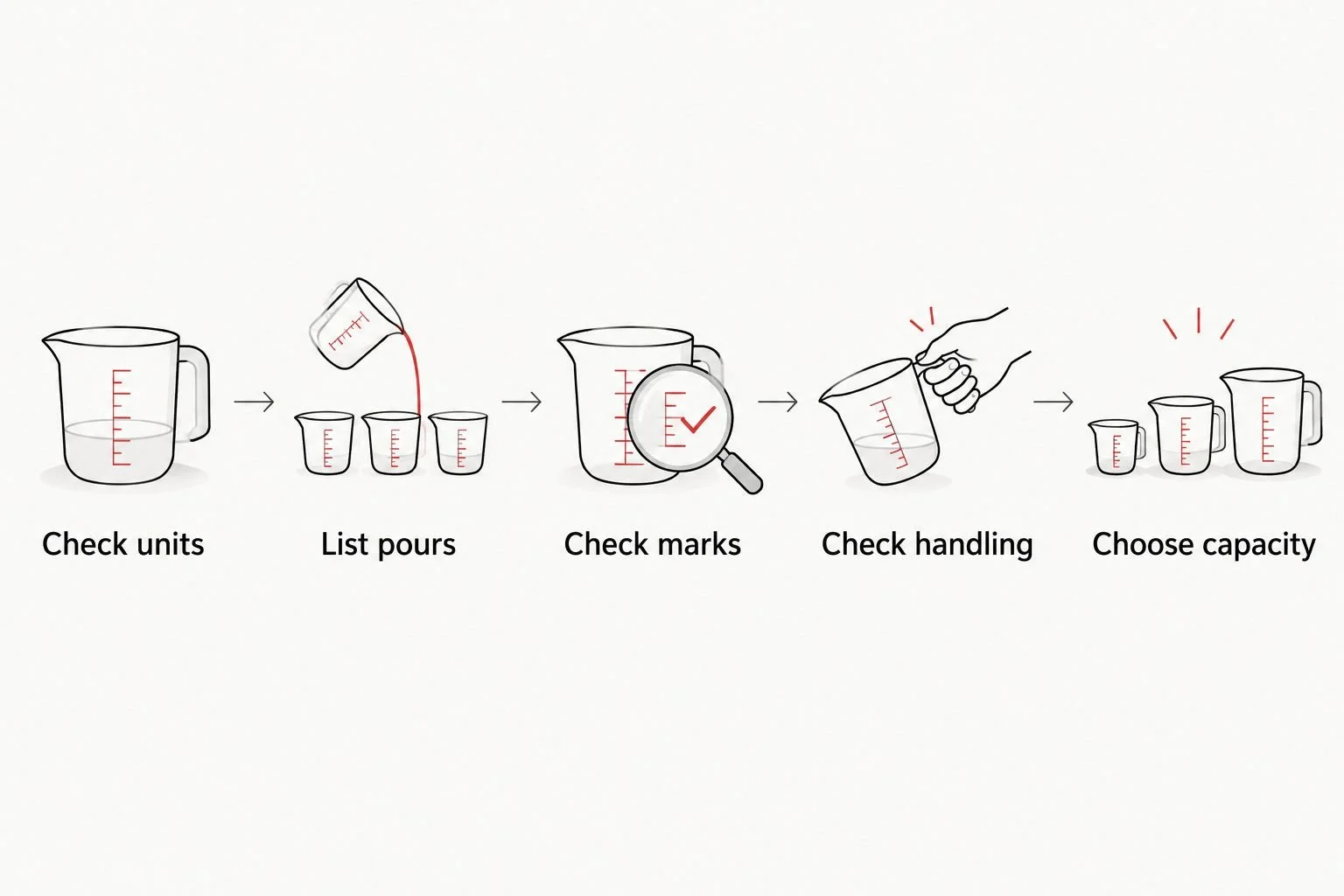
Choose capacity after checking the measurements your recipes require.
Do I need more than one jigger?
Start with one jigger that covers your regular recipes. A second tool earns its place when it solves a specific measurement problem, such as switching between ounce and metric recipes or measuring small amounts your first tool cannot handle.
Buying two nearly identical jiggers does not fix missing graduations. Check the measurement coverage of each before adding another tool.
For larger batches, use a suitable graduated measuring vessel rather than counting repeated jigger fills. The goal is accurate ingredient quantities with fewer opportunities to lose track—not owning more equipment.
How do I get consistent pours from the size I choose?
The right jigger still needs a consistent technique. Hold it level, keep the relevant graduation visible, and bring the liquid to the intended mark before transferring it into your shaker or mixing glass.
For a rim measurement, fill to the rim without deliberately building a mound above it. For an interior measurement, use the marked line rather than estimating a fraction of the cup’s height. Tapered sides make height-based guesses unreliable.
Rinse between ingredients when residue would affect the next measurement or drink. Follow the tool’s care instructions rather than assuming every finish tolerates the same cleaning method.
Qualitybarware’s bartender-curated bar tools suit home enthusiasts who want practical selection advice. That guidance helps with choosing a format, but you still need to check the individual jigger’s markings against your recipes.
FAQ
What jigger size should I buy for my first home bar?
Choose a 1 oz / 2 oz jigger if your recipes use US fluid ounces. Check for readable ¼ oz, ½ oz, and ¾ oz markings, plus a way to measure any other quantities your regular recipes require.
Is a 1 oz / 2 oz jigger better than a ¾ oz / 1½ oz jigger?
A 1 oz / 2 oz jigger is more convenient when your recipes regularly require 2 oz pours. A ¾ oz / 1½ oz jigger directly measures those smaller full-cup amounts, so the better choice depends on your recipes and the interior marks.
Is a 30 mL / 60 mL jigger the same as a 1 oz / 2 oz jigger?
A 30 mL / 60 mL jigger is not exactly the same as a 1 oz / 2 oz jigger. One US fluid ounce is approximately 29.57 mL; match your recipe’s units instead of switching between rounded equivalents.
Can I measure half an ounce in a two-ounce jigger?
You can measure ½ oz in a 2 oz jigger if it has an appropriate ½ oz graduation. Do not estimate the amount from the cup’s height, because tapered sides do not hold equal volumes at equal height intervals.
Does every double-ended jigger have the same measurements?
Double-ended jiggers do not all have the same capacities or interior markings. Read the listed units, the capacity of each end, and the smaller graduations before buying.
Do I need a different jigger for whiskey cocktails?
You do not need a whiskey-specific jigger. Choose the capacity and markings that match your whiskey cocktail recipes, just as you would for recipes using gin, rum, or another spirit.
Can I use a shot glass instead of a jigger?
Use a shot glass for measurement only when its capacity or graduations are known. An unmarked shot glass does not tell you how much liquid you are adding, and it does not replace smaller fractional measurements.
One last thing
The smallest useful mark deserves as much attention as the largest cup. A jigger that handles the spirit but leaves you guessing the syrup has only solved part of the job. Before buying in 2026, check the smallest amount in a favorite recipe and confirm you can measure it directly.
The reason to consider Qualitybarware is practical selection by a working bartender, not a promise that every tool fits every home bar. Bring your recipe requirements to the decision. Buy the jigger that measures them.